
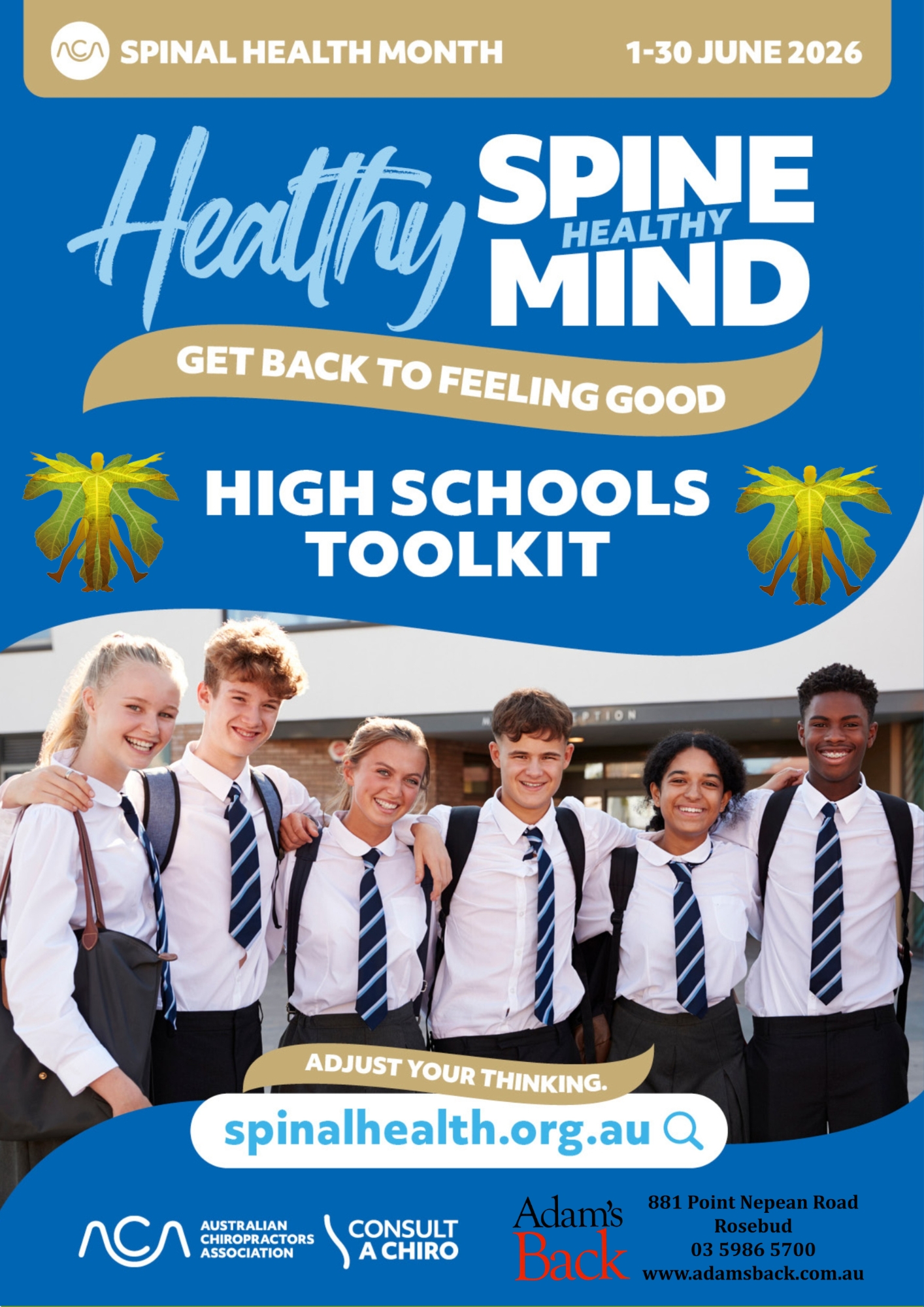

National Spinal Health Month 2026 is here, and we’re joining the movement to help young Australians understand something crucial: a healthy spine supports a healthy mind. For high school students navigating years 7-12, the habits you develop now can have lifelong impacts on your physical health, mental wellbeing, and academic success.
The statistics are striking—and concerning. Up to 4 in 10 Australian high school students experience low back pain, with 30-50% experiencing persistent pain lasting longer than three months. The problem is growing, and it’s directly linked to modern lifestyle habits that many students don’t even recognise as problematic.
Please note: This article is for informational and educational purposes only. If you’re experiencing persistent pain, speak with your chiropractor for personalised assessment and care.
The Hidden Crisis: Back Pain in Young Australians
Back pain isn’t something you have to wait until adulthood to develop. Research shows that adolescent students are increasingly experiencing spinal health problems, and the consequences are significant.
According to the National Kids in Pain Report 2025, published by Chronic Pain Australia, musculoskeletal pain (affecting joints and back) is the most common pain condition impacting kids, affecting 71% of those surveyed. An additional 45% reported headaches and migraines.[1]
But here’s what really matters: the impact of this pain on your life.
The Real Cost of Chronic Pain in Students
Among high school students living with chronic pain:
Educational Impact:
- 83% miss school because of pain
- 57% fall behind academically
- Concentration and focus become difficult
Physical Activity Impact:
- 85% miss out on sport
- 81% reduce participation in physical activities
- Overall fitness and health suffer
Sleep and Mental Health Impact:
- 84% experience poor sleep
- 82% experience impacts on mental health
- Quality of life significantly reduced
When you’re in pain, it affects everything—your grades, your social life, your sports participation, your sleep, and your mental health. The interconnection is real and documented.[2]
Why The Modern Lifestyle is Putting Your Spine Under Pressure
Your developing spine is under pressure from multiple modern lifestyle factors. Understanding these factors is the first step toward prevention.
1. Tech Neck and Excessive Screen Time
You’re probably reading this on a device. And chances are, your head tilts forward slightly. That’s “tech neck” in action.
Tech neck is a musculoskeletal disorder caused by prolonged forward head tilt while using smartphones, tablets, laptops, or computers. Studies show that regularly bending your head forward while scrolling, texting, or studying can place significant strain on your neck, shoulders, and spine.[3]
Here’s the physics: Your head weighs about 4-5 kilograms. When your head is in a neutral position, your neck muscles work efficiently. But for every 15 degrees your head tilts forward, you add approximately 12 kilograms of extra stress to your cervical spine. Spend hours in this position daily, and you’re essentially carrying an extra person’s weight on your neck!
The consequences include:
- Neck pain and stiffness
- Shoulder tension
- Headaches
- Upper back pain
- Poor posture habits that become ingrained
With increased screen time for schoolwork, social media, gaming, and entertainment, tech neck has become a growing concern for teenagers.
2. Poor Posture at School and Home
Whether sitting in the classroom, studying at home, or hunched over a laptop, many students spend hours in poor postural positions.
Poor posture creates several problems:
- Spinal stress: Forward slouching increases pressure on spinal discs and joints
- Muscle tension: Some muscles work overtime while others become weak and underactive
- Reduced mobility: Prolonged poor posture limits your range of motion
- Chronic patterns: Poor posture during your teen years can become a lifelong habit
The key insight: healthy upright posture with relaxed shoulders, feet flat on the floor when seated, and your head held upright rather than leaning forward should be your default position.
3. Heavy School Bags
How much are you carrying? If your backpack weighs over 10% of your body weight, it’s too heavy.[4]
An overloaded or poorly worn backpack places unnecessary strain on your spine and shoulders:
- Weight pulls you backward, forcing your spine to compensate
- Wearing only one strap creates asymmetrical loading
- Heavy packs can compress your developing vertebrae
Smart backpack habits:
- Pack only essential items
- Place heavier items closest to your spine (centre of your back)
- Always use both shoulder straps
- Fasten waist or chest straps if available
- Have your backpack professionally fitted
4. Sedentary Behaviour and Lack of Movement
Sitting is the new smoking, and this especially applies to students. Long periods of sitting—whether in classes, studying at home, or gaming—place continuous stress on your spine.
The problem compounds when you combine sitting with:
- Poor posture
- Screen time
- Heavy backpack use
- Lack of movement breaks
The design of your spine did not account for prolonged static positions. It needs movement to stay healthy.
5. Inadequate Physical Activity
Physical activity plays a crucial role in maintaining healthy muscles, joints, and spinal development. Yet many students don’t get enough movement.
Recommended activity: At least 60 minutes of physical activity daily through sport, walking, cycling, or other movement-based activities.[5]
When you don’t get enough activity:
- Your core muscles weaken
- Your spine becomes less stable
- Your flexibility decreases
- Your overall health suffers
The Spine-Mental Health Connection
People often overlook this important fact: spinal health directly influences mental health.
When you’re experiencing chronic back pain:
- Pain disrupts sleep, affecting mood and cognitive function
- Inability to participate in sports affects your identity and confidence
- School absences create academic pressure and stress
- Limited physical activity reduces natural mood-boosting endorphins
- Chronic discomfort creates anxiety
Conversely, when your spine is healthy and pain-free:
- You sleep better, improving mood and mental clarity
- You can participate in activities you love
- You attend school consistently
- Regular movement boosts endorphins and mental health
- Confidence and independence improve
The research is clear: addressing spinal health simultaneously supports mental wellbeing.[6]
Be Spine Smart: Practical Prevention Strategies
Prevention is absolutely the best protection. Small changes today can make a lifelong difference. Here’s how to be “Spine Smart”:
1. Master Healthy Posture
When sitting (at school or at home):
- Sit back in your chair with your back supported
- Keep your feet flat on the floor
- Relax your shoulders (don’t hunch)
- Keep your head upright, not leaning forward
- Use armrests if available
When standing:
- Distribute weight evenly on both feet
- Keep your shoulders relaxed
- Keep your head aligned with your spine
- Avoid standing on one leg for extended periods
When using devices:
- Bring phones and tablets to eye level (don’t look down)
- Position your laptop screen at eye level
- Use a separate keyboard and mouse if possible
- Avoid texting or scrolling in bed
2. Manage Your Screen Time Smartly
The Australian Institute of Family Studies recommends:
- Limit recreational screen time
- Take regular movement breaks (every 30 minutes)
- Practice the 20-20-20 rule: Every 20 minutes, look at something 20 feet away for 20 seconds
- Avoid screens for at least one hour before bed
Pro tip: For every hour of screen time, take a 10-minute movement break. Stand, stretch, walk around. Your neck will thank you.
3. Pack Your Backpack Correctly
- Assess weight: Is your backpack over 10% of your body weight? Lighten it.
- Pack smart: Put heavier items (textbooks) closest to your spine
- Use both straps: Always wear your backpack on both shoulders
- Fasten additional straps: Use waist or chest straps if available
- Consider your setup: Explore options like locker storage or rolling bags
4. Build Regular Movement Into Your Day
Sitting for long periods is harmful. Movement is medicine.
During the school day:
- Stand and stretch during class if possible
- Take movement breaks between classes
- Walk to lunch rather than sitting immediately
- Use the stairs instead of the elevator
After school:
- Participate in sports or physical activities
- Go for a walk or a bike ride
- Do some light stretching or yoga
- Avoid sitting immediately after school
At home:
- Stand while studying (use a standing desk)
- Take breaks every 30 minutes
- Do some light exercise or stretching
- Limit sedentary activities
5. Strengthen Your Core and Back
A strong core is your spine’s best friend. These exercises help:
Planks: Hold a plank position for 20-60 seconds. Rest and repeat. Strong core muscles support your spine during all activities.
Bird Dogs: On hands and knees, extend opposite arm and leg. Hold briefly. This builds stability without stressing your spine.
Bridges: Lie on your back, bend knees, and lift hips. This strengthens your glutes and lower back.
Wall Sits: Sit with your back against a wall, knees bent. Hold for 20 to 30 seconds. This builds leg and core strength.
Stretching:
- Hamstring stretches: Help reduce lower back stress
- Hip flexor stretches: Counteract sitting-induced tightness
- Shoulder rolls: Release neck and shoulder tension
Aim for these exercises 3-4 times per week, even if just for 10-15 minutes.
6. Optimise Your Study Setup
At your desk:
- Monitor at eye level (top of screen at or just below eye height)
- Feet flat on the floor or footrest
- Elbows at 90 degrees when typing
- Keyboard and mouse at waist height
- Adequate lighting to avoid eye strain
When studying:
- Take breaks every 30 minutes
- Change positions frequently
- Do some gentle stretching
- Move around between subjects
Headaches: A Warning Sign
Poor posture and spinal strain are common contributors to headaches in teenagers. If you’re experiencing frequent headaches:
Consider these factors:
- How is your posture while studying?
- How much screen time are you doing daily?
- How heavy is your backpack?
- Are you getting enough sleep?
- Are you staying hydrated?
You can reduce or prevent many headaches by:
- Improved posture
- Regular movement
- Screen breaks
- Proper hydration
- Adequate sleep
- Stress management
If headaches persist despite lifestyle changes, see your chiropractor for evaluation.
Your Spinal Health Is Your Future Health
Developing healthy spinal habits during high school is an investment in your future. The habits you build now become your default patterns for life.
Consider this:
- Poor posture learned in high school often persists into adulthood
- Early-onset back pain in teenagers predicts chronic pain in adults
- The injuries you prevent now save you pain and problems later
- The stronger your core and spine are now, the more resilient your back in the future
You have the power to make choices now that will keep you healthy, active, and pain-free for decades to come.
Resources and Support
For more information and free resources: Visit us for factsheets, checklists, and practical tips covering:
- Postural guides
- Stretching routines
- Ergonomic setup advice
- Tech neck prevention
- Headache management
At Adam’s Back in Rosebud: We’ve been supporting young people’s health for 30 years. If you’re experiencing back pain, headaches, or other spinal health concerns, we’re here to help with professional assessment and evidence-based care.
Whether you need help with current pain or want to prevent future problems, our team can provide guidance customised to your needs.
The Bottom Line
A healthy spine supports a healthy mind. This isn’t just a slogan—it’s backed by research and demonstrated daily in the lives of students who take their spinal health seriously.
The good news? Prevention works. Early intervention helps. Small changes in your daily habits can have enormous impacts on your comfort, health, academic performance, and mental wellbeing.
This National Spinal Health Month, commit to being “Spine Smart”: ✓ Watch your posture ✓ Limit screen time and take breaks ✓ Pack your backpack smartly ✓ Move regularly ✓ Strengthen your core ✓ Optimize your study setup
Your future self will be grateful for the choices you make today.
Visit Adam’s Back
Located at 881 Point Nepean Road in Rosebud, Adam’s Back has been supporting the health of young people and their families for 30 years. Whether you’re experiencing back pain, headaches, or other spinal health concerns, or simply want to prevent future problems, we’re here to help.
Dr Adam Mackey and our team provide evidence-based chiropractic care designed to address your specific needs and help you move better, feel better, and live better.
Ready to prioritise your spinal health? Contact us today.
📍 881 Point Nepean Road, Rosebud 📞 03 5986 5700 🌐 adamsback.com.au
References
[1] Chronic Pain Australia. National Kids in Pain Report 2025. https://www.chronicpainaustralia.org.au/
[2] International Association for the Study of Pain. The bidirectional relationship between chronic pain and mental health. 2021.
[3] Miller DR, Welch C, Cuttles H, et al. Assessment of the impact of prolonged smartphone use on cervical spine posture. Int J Environ Res Public Health. 2019;16(12):2173.
[4] Chow DHK, Leung KL, Holmes AD. The effects of backpack load on the biomechanics of load carriage and posture in adolescents. Ergonomics. 2007;50(2):220-233.
[5] Australian Department of Health. Physical Activity and Sedentary Behaviour Guidelines. https://www.health.gov.au/our-work/physical-activity-and-sedentary-behaviour-guidelines
[6] Pincus T, Burton AK, Vogel S, Field AP. Fear avoidance and prognosis in back pain: a systematic review and synthesis of current evidence. Arthritis Rheum. 2013;65(1):132-140.
Disclaimer: This blog post is for informational and educational purposes only. It is not intended as medical advice and should not be used to diagnose or treat any health condition. The information presented does not replace professional chiropractic evaluation and treatment. Always consult with a qualified healthcare professional regarding back pain, headaches, or other health concerns.

Comments are closed